A View from the Community
By Anton Basenko, INPUD Executive Director
Jointly with peers from EuroNPUD and AfricaNPUD
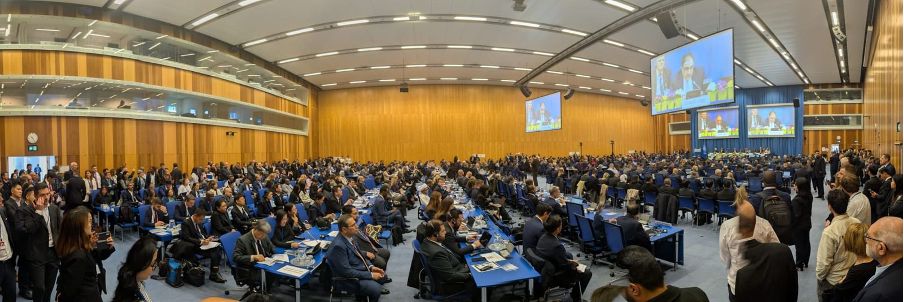
The 69th session of the United Nations Commission on Narcotic Drugs (CND69), held in Vienna from 9–13 March 2026, once again positioned itself as the central event for global drug policy debate. With over 2,000 participants from governments, UN agencies, and civil society, the scale of engagement was undeniable. Yet, as always, the real question is not who was in the room—but whose voices shaped the outcome.
This is my fourth CND, and from the perspective of people who use drugs, this year’s session exposed a familiar tension: a system increasingly fluent in the language of health, human rights, and inclusion, but still structurally anchored in prohibition, criminalisation, and control. Not a surprise though, from the background community facing funding cuts, geopolitical shifts, shrinking space for civil society, and drastically changed narratives from the USA which for many years was one of the key allies in harm reduction and human rights fields.
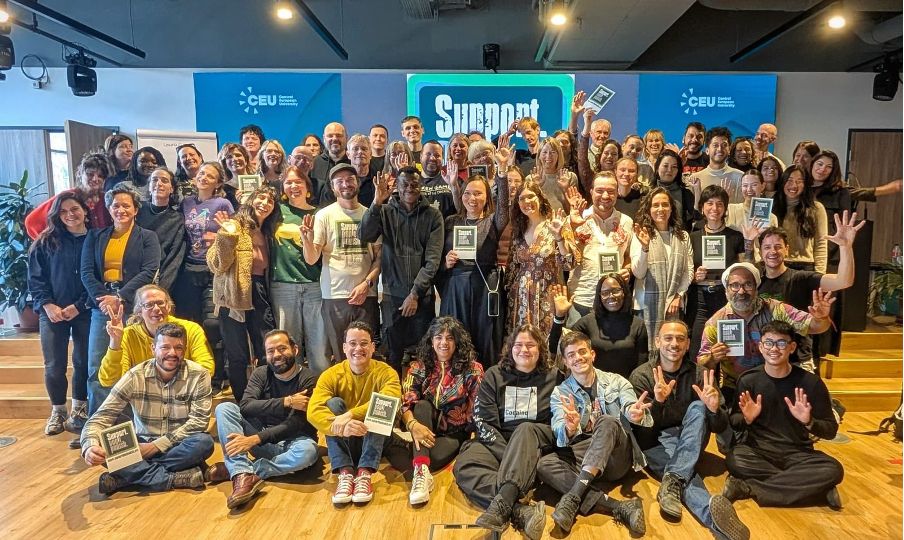
Despite that, it was so great to see not so large, as usual, but committed as never, a group of peers from EuroNPUD, AfricaNPUD, bringing their unique perspectives and experiences, and delivering highly vocal and visible overtones of the 69th CND.
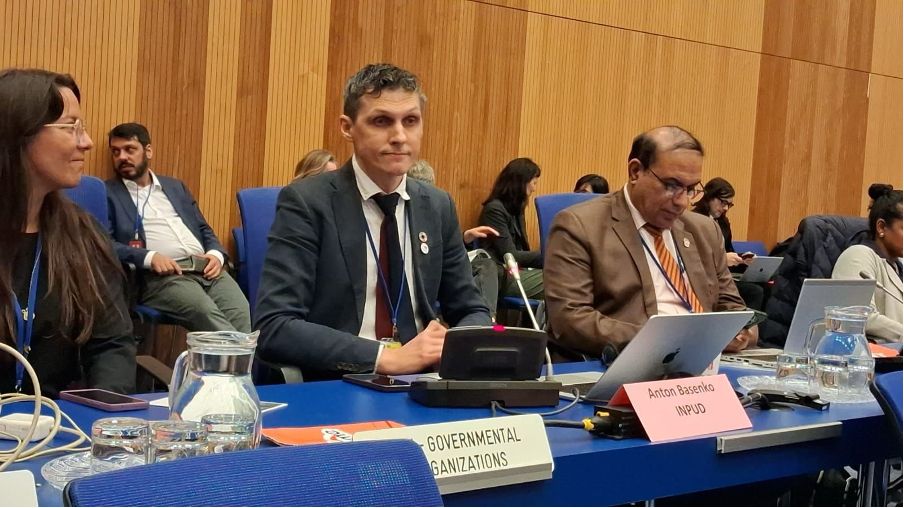
— Ahmed Said, Regional Coordinator, AfricaNPUD
“Prevention and rehabilitation does not equalise to abstinence from using drugs, rather it should factor the autonomy of choice that enhance human right and dignity. At the 69th CND we’ve witnessed drastic changes where seven countries of Africa voted in favour of harm reduction through Norway and Finland Resolution. We remain accountable to this decision.”
Reflections from EuroNPUD
Leo Jeffreys, Acting Executive Director of EuroNPUD, offered the following reflections:
— Leo Jeffreys, Acting Executive Director, EuroNPUD
“At the most recent CND, EuroNPUD again brought European perspective into a global space where policy narratives remain constrained by prohibition and control, despite the evidence-based push to align with health, human rights, and inclusion.”
Represented by Joana Canêdo, Leo Jefferys, John Melhus, and Alexei Lakhov, EuroNPUD brought visibility to some of the realities of people who use drugs across Europe. Through co-sponsored events on Nordic drug policy, drug consumption rooms, human rights in drug policy, and grassroots mobilisation, EuroNPUD highlighted both the leadership and contradictions within Europe itself. Europe is a region often seen as progressive, but it is marked by uneven access to harm reduction, ongoing criminalisation, and disparities between national approaches.
EuroNPUD’s engagement with key regional and global actors included the European Union Drugs Agency, World Health Organization, UNAIDS, United Nations Development Programme, the International Drug Policy Consortium, and the International Network of People who Use Drugs. This engagement reinforced the role Europe can and should play in advancing evidence-based, rights-affirming drug policy.
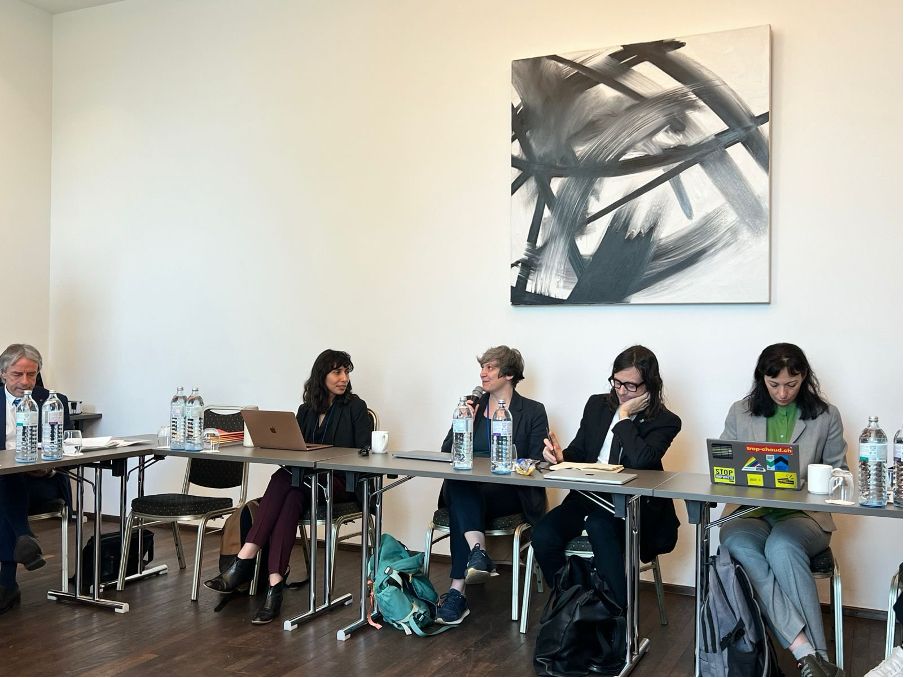
EuroNPUD was disappointed to see the resolutions adopted by the Commission reflect a continued imbalance in global drug policy priorities. While framed as comprehensive and evidence-based, they place a strong emphasis on supply reduction, trafficking, and criminal justice responses. This focus on control of precursors and supply using enforcement-heavy approaches will reinforce the criminalisation that has historically failed to improve health outcomes for people who use drugs.
Although public health is referenced, harm reduction is not meaningfully addressed in its full spectrum, with limited recognition of essential, lifesaving services such as overdose prevention, drug checking, supervised consumption spaces, and involvement of peers as essential workforce, all of which are especially critical in the context of rapidly evolving synthetic drug markets.
These resolutions also fall short in recognising the central role of people who use drugs in shaping effective and responsive policies. Mechanisms such as early warning systems remain largely technical and state-driven, overlooking the vital contributions of community expertise and peer networks. This stands in contrast to the realities reflected in key side events where EuroNPUD and its partners actively contributed: the Nordic Network model, where harm reduction, cooperation, and legal regulation are meaningfully explored; the Support Don’t Punish Campaign and its peer-led mobilisation among drug user unions across Europe; dialogues on alternative development grounded in Indigenous rights; community-led responses in HIV; and the growing leadership of women who use drugs.
From EuroNPUD’s perspective, CND69 underscored both the responsibility and the opportunity for Europe to move beyond rhetoric and lead by example. While some European countries and institutions continue to champion harm reduction and public health approaches, this leadership must be adopted by consensus as the only meaningful way forward. People who use drugs across Europe are still too often positioned as passive recipients of care rather than as partners and leaders in policymaking.
EuroNPUD maintains that Europe must confront its internal contradictions, scale up decriminalisation efforts, ensure sustainable funding for harm reduction, and meaningfully include key communities in decision-making processes. EuroNPUD is grateful for the support from the Robert Carr Fund for Civil Society Networks and the Support Don’t Punish Campaign for our engagement in CND, and remains committed to pushing for a European response that not only speaks the language of human rights, but fully implements it in practice.
So, as an Executive Director of INPUD, the representative of the community on the global level, and person with lived and living experience over 30 years, here are my key takeaways from CND69:
Incremental Progress, Structural Stagnation
The 69th CND adopted five resolutions and scheduled three new substances, including highly potent synthetic opioids linked to overdose risks. These decisions reflect a continued prioritisation of monitoring and control—particularly in response to synthetic drug markets.
There were also efforts to strengthen early warning systems, improve supply chain oversight, and expand alternative development approaches with references to gender and climate. These are important technical steps, but they remain firmly within the existing enforcement-oriented paradigm.
What is striking is what remains absent: no meaningful shift toward decriminalisation, no binding commitments to scale up harm reduction, and no accountability mechanisms for human rights violations carried out in the name of drug control.
A Decade After UNGASS: Promises Unfulfilled
The 69th CND marked ten years since the 2016 UNGASS—a milestone that should have been a moment of reflection and course correction. Instead, it highlighted how little has fundamentally changed. AfricaNPUD was part of the panelist to the side event organized by the Norway Embassy to enhance influence of the Norway Finland Resolution (E/CN.7/2026/L.6/Rev.1). AfricaNPUD was able to pinpoint retrogressive and unrealized progress from 2016 UNGASS.
As highlighted in the latest IDPC analysis, the past decade has seen continued criminalisation, mass incarceration, and disproportionate impacts on marginalised communities. Funding for harm reduction remains insufficient, while preventable deaths continue to rise.
For communities, these are not abstract policy failures. They are measured in lives lost—through overdose, HIV, hepatitis C, and systemic neglect.
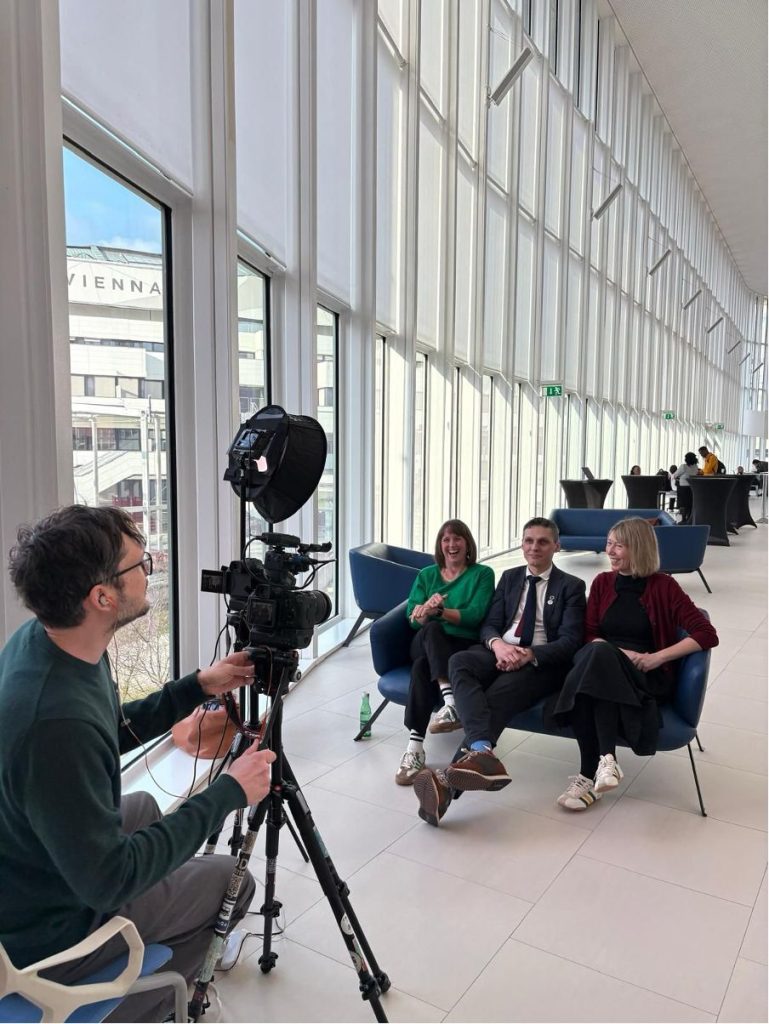
Human Rights: Still Contested Ground
One of the clearest fault lines at CND69 was around human rights. Civil society—including harm reduction networks and human rights organisations—again called for the abolition of the death penalty for drug-related offences and for stronger accountability mechanisms.
This part also addressed the racial discrimination against African descent in the application of drugs law. AfricaNPUD’s message was clear that the law should not be selective and in totality criminalizing drugs is dictatorship and harm reduction is a freedom of choice and autonomy.
Yet these calls remain politically contested. While some Member States and regional bodies emphasised evidence-based, rights-affirming approaches, others continued to promote punitive frameworks under the banner of “drug control.”
This contradiction defines the current moment: human rights are widely invoked, but selectively applied.
A Milestone for the Community: UNAIDS Decriminalisation Guidance
For our community, however, CND69 was not only about contestation—it was also about a long-awaited breakthrough.
During this session, we saw the launch of the new UNAIDS decriminalisation guidance: a landmark document developed with and for communities, including people who use drugs. This is not just another technical publication—it is the result of years of advocacy, evidence-building, and lived experience shaping global policy.
The guidance makes a clear, evidence-based case for decriminalisation as a necessary foundation for effective HIV responses, public health, and human rights. Crucially, it affirms what communities have always known: that criminalisation is not only ineffective, but actively harmful.
For INPUD and our allies, this moment represents both recognition and responsibility. Recognition that our expertise matters. Responsibility to ensure this guidance is not left on the shelf, but translated into real policy change at national level.
The Expert Panel: A Window of Opportunity?
One of the most significant developments at CND69 was the operationalisation of the newly established expert panel tasked with shaping recommendations for the 2029 review of global drug policy.
This panel could be transformative—if it is genuinely independent, grounded in evidence, and meaningfully inclusive of affected communities.
But there is also a risk: that it becomes another technocratic exercise, producing recommendations that are politically palatable but insufficiently ambitious. The history of the CND is full of such missed opportunities.
The Real Divide: Words vs. Power
Perhaps the most important takeaway from CND69 is not found in the resolutions, but in the broader political dynamics.
On one side, we see growing recognition—at least rhetorically—of harm reduction, community leadership, and the need for reform. On the other, we see the continued dominance of prohibitionist logic, securitisation, and state control.
This is not just a policy debate. It is a struggle over power: who defines the problem, who sets the agenda, and whose lives are valued.
Where Do We Go From Here?
For INPUD and the global community of people who use drugs, the path forward is clear.
We cannot afford another decade of incrementalism. The evidence is overwhelming, and the human cost is too high.
We need:
- Decriminalisation grounded in human rights
- Sustainable funding for harm reduction
- Accountability for abuses committed in the name of drug control
- And most importantly, the meaningful leadership of affected communities at every level
CND69 showed that the space for reform exists—but it will not be handed to us. It must be claimed.
Because ultimately, drug policy is not about substances. It is about people. And until that truth is reflected not just in words, but in power and policy, the system will continue to fail those it claims to serve.
Further Reading
For extended analytics about the outcomes of the 69th CND, we recommend the comprehensive publication by the Eurasian Harm Reduction Association (EHRA): EHRA CND69 Analysis (PDF)